Certificate of Analysis
Each batch of TB-500 undergoes rigorous third-party testing to ensure purity and identity verification. View the full lab report below.
TB-500 (Thymosin Beta-4)
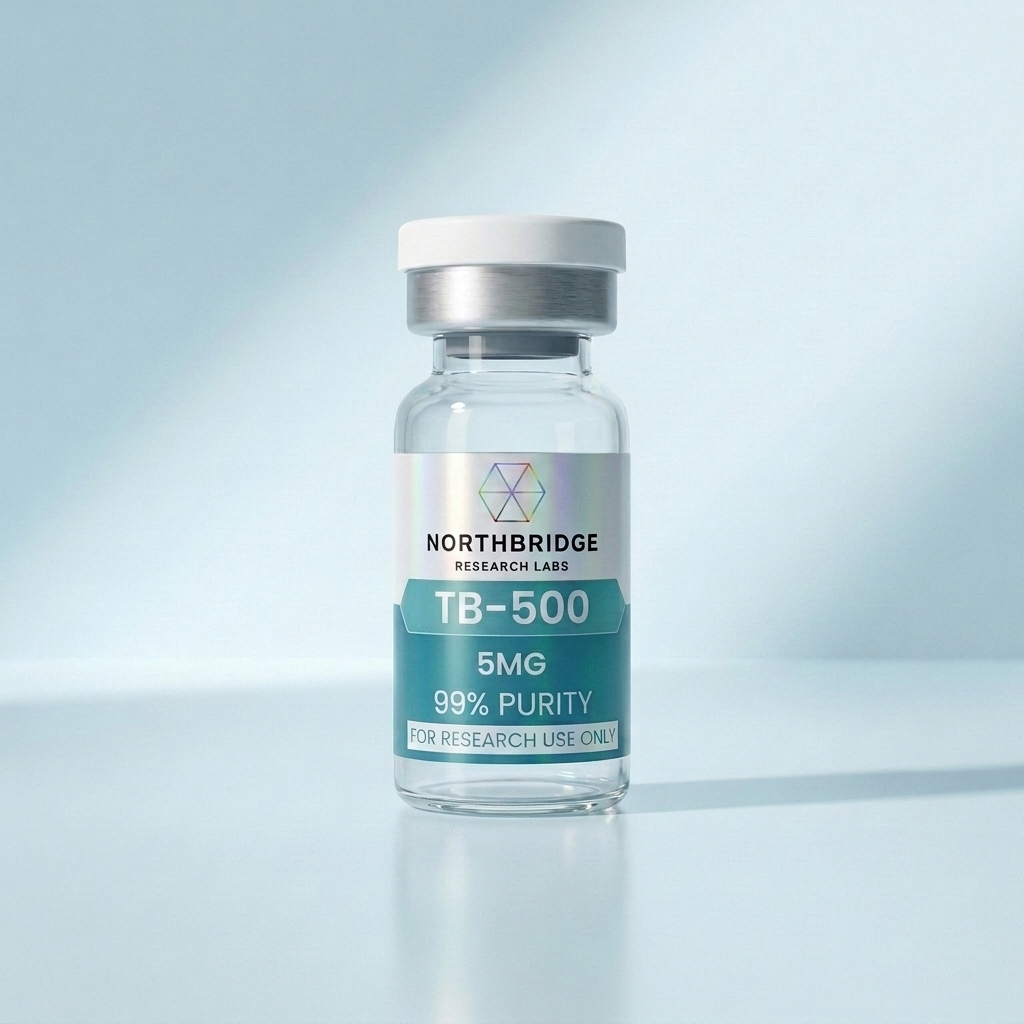
TB-500 (Thymosin Beta-4 fragment) is a synthetic peptide representing the active region of Thymosin Beta-4. This research-grade peptide is extensively studied for its effects on tissue repair mechanisms, cell migration dynamics, and anti-inflammatory pathways in laboratory settings.
99%+
5mg
Bundle & Save
Order before 2 PM EST, ships the same day. Fast, fully tracked, and sent in discreet, secure packaging. Free shipping on orders over $99.
Purity Guarantee. If independent third-party testing doesn't confirm our stated purity standards, you get a full refund plus a free replacement.
For Research Use Only
Intended for in-vitro research only. Not for human consumption. Must be 21+.
Specifications
Certificate of Analysis
Each batch of TB-500 undergoes rigorous third-party testing to ensure purity and identity verification. View the full lab report below.
Research background
TB-500 and Thymosin Beta-4: Tissue Repair Research
Thymosin beta-4 is the main actin-sequestering protein in mammalian cells and a well-studied tissue repair molecule. What its active sites do, what the wound, cardiac and neurological models showed, what 'TB-500' refers to, and how to verify the material you are working with.
Overview
Biochemical Characteristics
TB-500 contains the central actin-binding domain (amino acids 17-23: LKKTETQ) critical for G-actin sequestration. This region enables modulation of cytoskeletal dynamics, facilitating cell migration and tissue remodeling in experimental models.
Research Applications
Pathway / Mechanistic Context
Preclinical Research Summary
Form & Analytical Testing
Mechanisms of Action
Actin Sequestration - Binds G-actin to regulate cytoskeletal polymerization dynamics
Cell Migration Promotion - Enhances keratinocyte and endothelial cell motility
Anti-Inflammatory Signaling - Reduces pro-inflammatory cytokine expression (TNF-α, IL-1β)
Stem Cell Recruitment - Activates tissue-resident progenitor cell populations
Research Applications
1Wound Healing & Tissue Repair
TB-500 demonstrates remarkable wound healing acceleration in research models.
Key Research Findings
- Accelerates wound closure in rat dermal injury models
- Promotes angiogenesis and new blood vessel formation
- Reduces scarring through modulation of collagen deposition in animal wound models
- Enhances keratinocyte migration to wound sites
2Cardiac Tissue Research
Cardiovascular research applications show promising results.
Key Research Findings
- Reduces infarct size in mouse models of ischemic injury
- Promotes cardiomyocyte survival under hypoxic conditions
- Stimulates cardiac progenitor cell differentiation
- Improves cardiac function in heart failure models
3Muscle & Connective Tissue
Research indicates significant effects on muscle and connective tissue healing.
Key Research Findings
- Accelerates muscle fiber regeneration in animal injury models
- Reduces fibrosis in animal muscle injury models
- Promotes tendon and ligament repair in preclinical models
- Studied for effects on tissue elasticity in connective tissue models
Supporting Research & Bibliography
The following peer-reviewed publications support the research applications described above. References are provided for informational purposes to assist researchers in their literature review.
Total references: 4
Note: The information provided is for research reference only. It summarizes published in-vitro, animal and, where cited, human clinical studies of the compound; findings from those studies are not claims about this product. This product is intended for laboratory research purposes only. Not for human or veterinary use.
Research Use Only: This product is intended for laboratory research purposes only. Not for human or veterinary use. By purchasing, you confirm that you are a qualified researcher and will use this product in accordance with all applicable regulations.