πŸ”₯ 25% OFF with code NB25NOWSame Day ShippingFREE Shipping Over $99πŸ”₯ 25% OFF with code NB25NOWSatisfaction GuaranteedπŸ”₯ 25% OFF with code NB25NOWSame Day ShippingFREE Shipping Over $99πŸ”₯ 25% OFF with code NB25NOWSatisfaction GuaranteedπŸ”₯ 25% OFF with code NB25NOWSame Day ShippingFREE Shipping Over $99πŸ”₯ 25% OFF with code NB25NOWSatisfaction GuaranteedπŸ”₯ 25% OFF with code NB25NOWSame Day ShippingFREE Shipping Over $99πŸ”₯ 25% OFF with code NB25NOWSatisfaction Guaranteed
HomeProductsSermorelin Acetate
Sermorelin Acetate
Peptides

Sermorelin Acetate

$50.00In StockChecking availability...

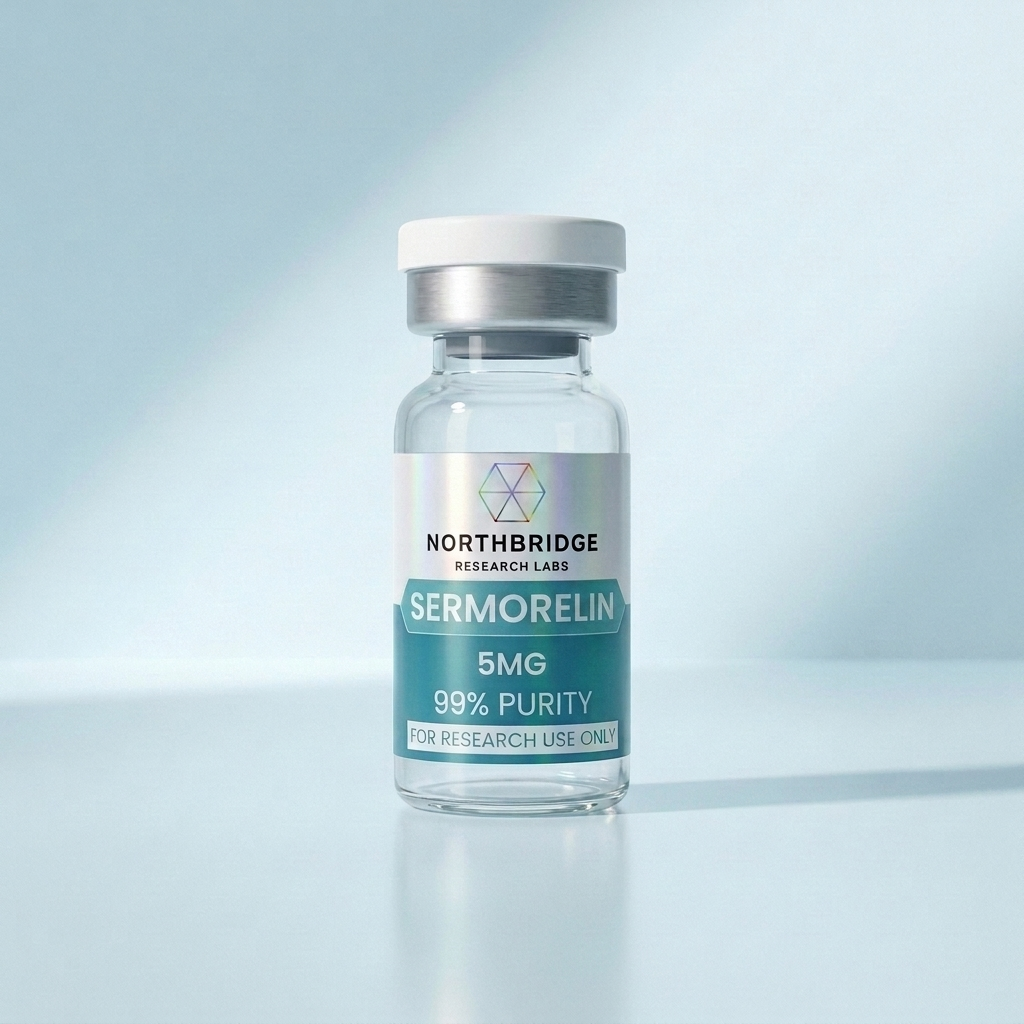
Sermorelin is a growth hormone-releasing hormone (GHRH) analog consisting of the first 29 amino acids of GHRH. Used extensively in research studying growth hormone regulation.

Purity

99%+

Size

5mg

1
COA Available
Lab Verified
Fast Shipping
!

For Research Use Only (RUO)

This product is intended for in-vitro research applications only. Not for human or animal consumption, cosmetic use, or as a dietary supplement. All customers must be at least 21 years of age. It is the researcher's responsibility to handle materials in accordance with their institution's safety protocols and all applicable laws.

Specifications

Molecular Weight3,358 Da
Sequence29 Amino Acids
AppearanceWhite lyophilized powder
StorageStore at -20Β°C
SolubilitySoluble in sterile water

Certificate of Analysis

Each batch of Sermorelin undergoes rigorous third-party testing to ensure purity and identity verification. Download your COA instantly.

HPLC Purity Analysis
Mass Spectrometry Verification
Lot-Specific Documentation

Extended Research Applications & Mechanisms

Overview

Sermorelin (GHRH 1-29) is a synthetic peptide analog representing the first 29 amino acids of endogenous growth hormone-releasing hormone. First synthesized in 1980, this truncated sequence retains full biological activity at the GHRH receptor while offering improved stability compared to full-length GHRH. Sermorelin is utilized in laboratory research to study growth hormone axis physiology, pituitary function, and GHRH receptor pharmacology. All discussion herein is limited to experimental research contexts and does not imply applied, therapeutic, or physiological use.

Biochemical Characteristics

Sequence: Tyr-Ala-Asp-Ala-Ile-Phe-Thr-Asn-Ser-Tyr-Arg-Lys-Val-Leu-Gly-Gln-Leu-Ser-Ala-Arg-Lys-Leu-Leu-Gln-Asp-Ile-Met-Ser-Arg-NHβ‚‚
Molecular Formula: C₁₄₉H₂₄₆Nβ‚„β‚„Oβ‚„β‚‚S
Molecular Weight: 3357.93 g/mol
CAS Number: 86168-78-7

Sermorelin represents the minimal active sequence of GHRH, containing all amino acids necessary for full GHRH receptor binding and activation. The C-terminal amidation enhances stability and receptor affinity in experimental models.

Research Applications

Sermorelin is employed in laboratory research to study GHRH receptor biology and growth hormone secretion dynamics. Common experimental applications include pituitary function tests, GH secretion pattern analysis, and GHRH receptor pharmacology studies. Research protocols utilize Sermorelin to investigate age-related changes in GH axis function, the relationship between GHRH signaling and somatotroph responsiveness, and the preservation of physiological feedback mechanisms during GH axis stimulation.

Pathway / Mechanistic Context

Mechanistically, Sermorelin activates GHRH receptors on pituitary somatotrophs, triggering Gs-protein coupling and adenylyl cyclase activation. The resulting cAMP elevation activates protein kinase A (PKA), which phosphorylates CREB to promote GH gene transcription and stimulates calcium channels to trigger GH secretion. Unlike exogenous GH administration, Sermorelin maintains the integrity of negative feedback loops. Somatostatin still inhibits GH release, and IGF-1 feedback remains functional, preserving physiological pulsatile secretion patterns essential for normal GH biology.

Preclinical Research Summary

Preclinical investigations of Sermorelin include in-vitro pituitary cell studies and in-vivo animal models evaluating GH secretion, growth parameters, and pituitary reserve. Reported findings include robust GH release, maintained pulsatility, and preservation of negative feedback sensitivity. Animal studies explore age-related changes in responsiveness to Sermorelin, demonstrating utility for studying somatotroph function across the lifespan. All findings are interpreted strictly within the context of laboratory research models.

Form & Analytical Testing

Sermorelin is supplied as a synthetic research-grade lyophilized peptide. Identity and purity are confirmed through analytical methodologies including high-performance liquid chromatography (HPLC) and mass spectrometry (MS). Batch-specific documentation includes certificate of analysis data supporting molecular identity and purity metrics β‰₯99%.

Mechanisms of Action

1

GHRH Receptor Agonism - Full agonist activity at the pituitary GHRH receptor (GHRH-R)

2

Somatotroph Stimulation - Triggers GH gene transcription and episodic hormone release

3

Physiological Pulsatility - Maintains natural GH secretion patterns and circadian rhythms

4

Feedback-Compatible - Functions within intact hypothalamic-pituitary negative feedback systems

Research Applications

1Pituitary Function Research

Studies on pituitary gland responsiveness and GH regulation.

Key Research Findings
  • Restores GH secretion in age-related decline models
  • Maintains hypothalamic-pituitary axis function and feedback
  • Produces physiological pulsatile GH release patterns
  • Useful for assessing pituitary GH reserve

2Growth Hormone Axis Studies

Research on GH secretion dynamics and regulation.

Key Research Findings
  • Full GHRH receptor agonist activity
  • Maintains somatostatin sensitivity
  • Preserves IGF-1 negative feedback mechanisms
  • Suitable for chronic administration studies

3Age-Related GH Research

Investigation of somatopause and aging effects on GH axis.

Key Research Findings
  • Assesses somatotroph responsiveness with age
  • Evaluates GHRH receptor expression changes
  • Studies restoration of GH secretion capacity
  • Models for understanding age-related GH decline

Supporting Research & Bibliography

The following peer-reviewed publications support the research applications described above. References are provided for informational purposes to assist researchers in their literature review.

1

Isolation, primary structure, and synthesis of human hypothalamic somatocrinin: growth hormone-releasing factor

Ling N, Esch F, BΓΆhlen P, et al.

Proceedings of the National Academy of Sciences1984;81:4302-4306DOIPubMed
2

Human pancreatic growth-hormone-releasing factor selectively stimulates growth-hormone secretion in man

Thorner MO, Rivier J, Spiess J, et al.

The Lancet1983;1:24-28DOIPubMed
3

Effects of single nightly injections of growth hormone-releasing hormone (GHRH 1-29) in healthy elderly men

Vittone J, Blackman MR, Busby-Whitehead J, et al.

Metabolism1997;46:89-96DOIPubMed
4

Human growth hormone and human aging

Corpas E, Harman SM, Blackman MR.

Endocrine Reviews1993;14:20-39DOIPubMed

Total references: 4

Note: The information provided is for research reference only. All research applications are based on in-vitro and animal studies. This product is intended for laboratory research purposes only. Not for human or veterinary use.

Research Use Only: This product is intended for laboratory research purposes only. Not for human or veterinary use. By purchasing, you confirm that you are a qualified researcher and will use this product in accordance with all applicable regulations.

Northbridge Research Labs | Buy Research Peptides Online