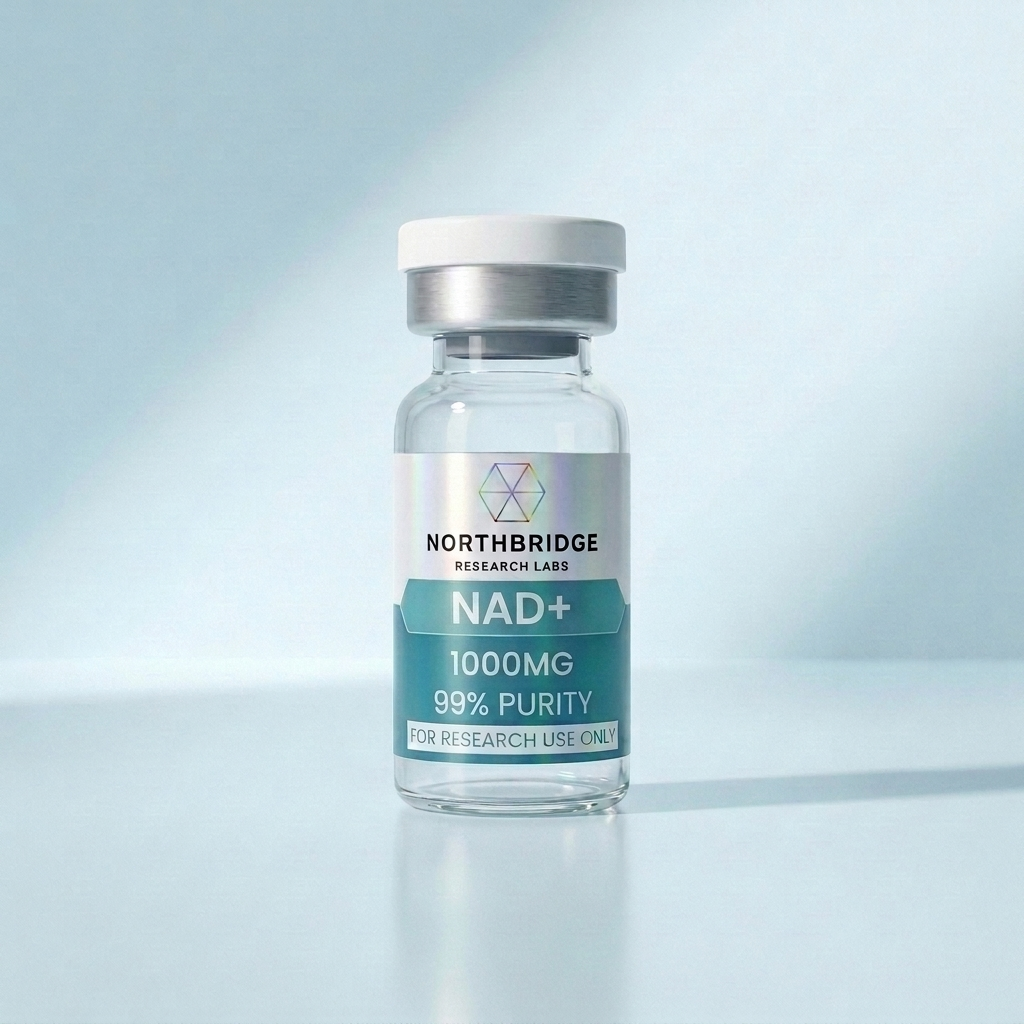
Certificate of Analysis
Each batch of NAD+ undergoes rigorous third-party testing to ensure purity and identity verification. The lab report for the latest batch is being finalized.
NAD+ (Nicotinamide Adenine Dinucleotide)
NAD+ (Nicotinamide Adenine Dinucleotide) is a critical coenzyme found in all living cells. It is essential for cellular energy metabolism, DNA repair, and gene expression regulation. NAD+ levels naturally decline with age, making it a central focus of longevity and metabolic research.
99%+
1000mg
Bundle & Save
Order before 2 PM EST, ships the same day. Fast, fully tracked, and sent in discreet, secure packaging. Free shipping on orders over $99.
Purity Guarantee. If independent third-party testing doesn't confirm our stated purity standards, you get a full refund plus a free replacement.
For Research Use Only
Intended for in-vitro research only. Not for human consumption. Must be 21+.
Specifications
Certificate of Analysis
Each batch of NAD+ undergoes rigorous third-party testing to ensure purity and identity verification. The lab report for the latest batch is being finalized.
Research background
NAD+ and Cellular Energy: The Coenzyme Revolution in Aging Research
How NAD+ works as both a redox coenzyme and a consumed substrate for sirtuins, PARPs and CD38, what the evidence on age-related decline actually shows, and practical notes on using and storing NAD+ in the lab.
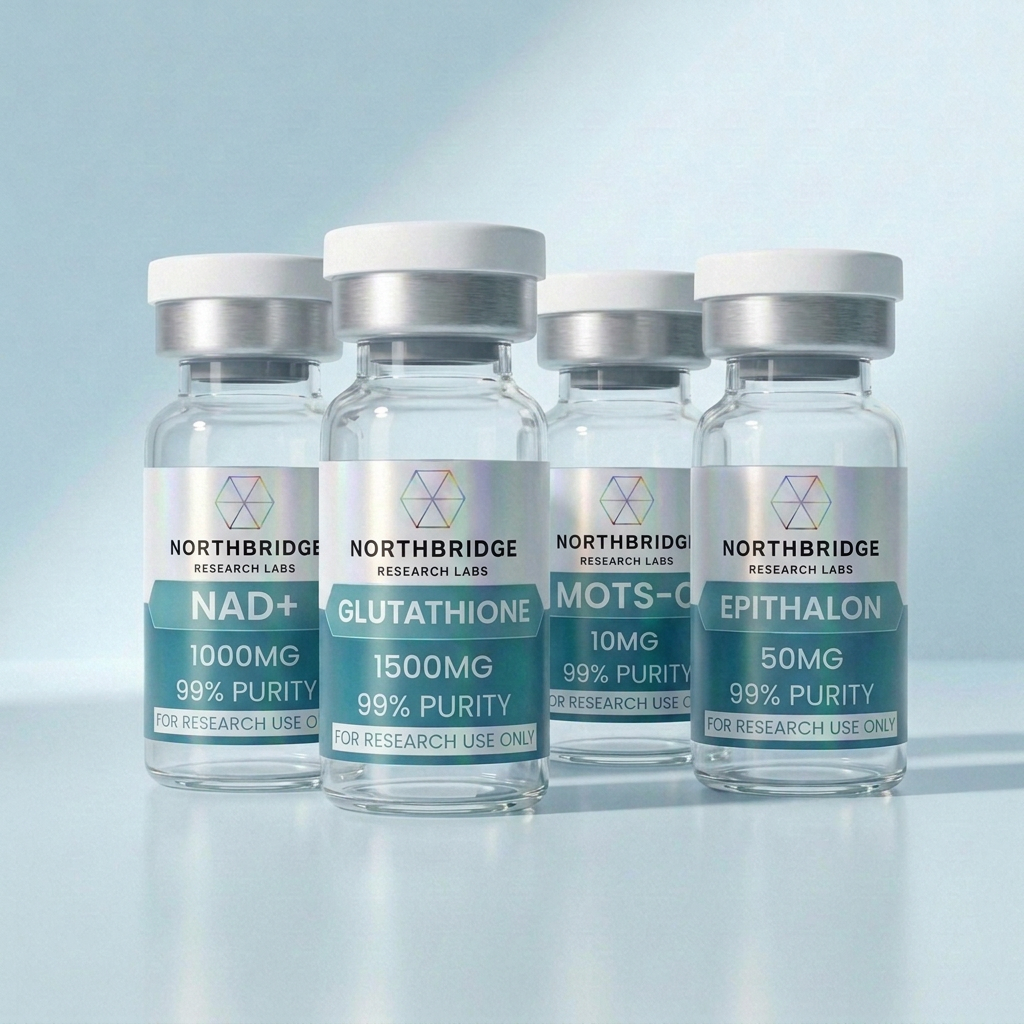
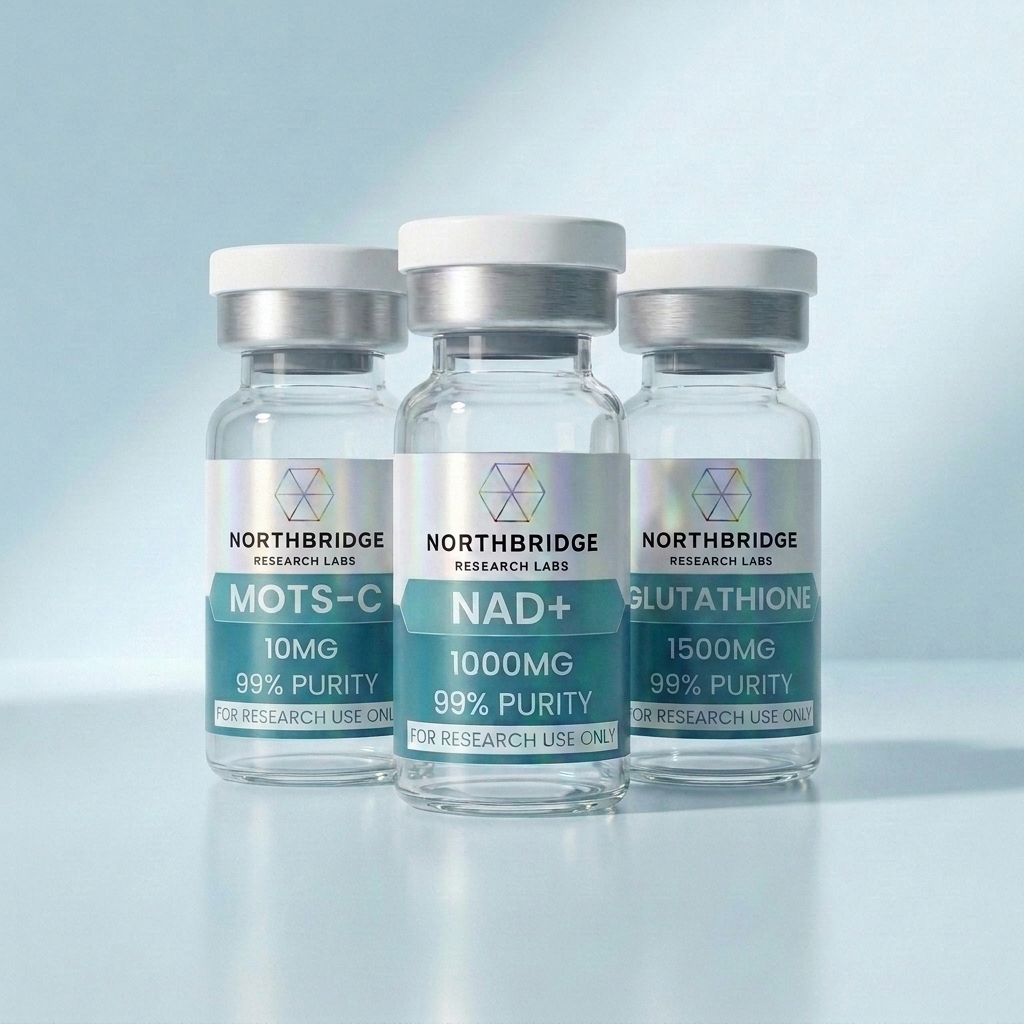
Buy it as a stack
This compound is part of our curated sets. Same vials, same testing, lower total.
Overview
Biochemical Characteristics
NAD+ consists of two nucleotides joined through phosphate groups: adenine bound to ribose phosphate connected to nicotinamide riboside phosphate. The nicotinamide ring undergoes reversible reduction to NADH, enabling its function as an electron carrier in experimental models.
Research Applications
Pathway / Mechanistic Context
Preclinical Research Summary
Form & Analytical Testing
Mechanisms of Action
Sirtuin Activation - Essential substrate for SIRT1-7 deacylase enzymes regulating metabolism and longevity
PARP Function - Required cofactor for poly(ADP-ribose) polymerase DNA repair and chromatin remodeling
Redox Coenzyme - Electron carrier in >400 metabolic reactions including glycolysis and oxidative phosphorylation
CD38/cADPR Signaling - Substrate for calcium signaling through cyclic ADP-ribose generation
Research Applications
1Cellular Energy & Metabolism Research
Studies on mitochondrial function and metabolic health.
Key Research Findings
- Central role in oxidative phosphorylation and ATP production
- Required for glycolysis, TCA cycle, and fatty acid oxidation
- NAD+/NADH ratio reflects cellular metabolic state
- Restoration improves mitochondrial function in aged animal models
2Sirtuin & Longevity Research
Investigation of NAD+-dependent deacylases and aging.
Key Research Findings
- Essential substrate for all seven sirtuin enzymes (SIRT1-7)
- Links metabolic state to epigenetic regulation
- NAD+ decline associated with reduced sirtuin activity in aging
- Restoration enhances sirtuin-mediated cellular protection in cell and animal studies
3DNA Repair & Genome Stability
Studies on PARP-mediated DNA repair mechanisms.
Key Research Findings
- Required for PARP1/2-mediated DNA damage response
- PARP activation can deplete cellular NAD+ pools
- NAD+ availability affects DNA repair capacity
- Balancing NAD+ consumption between sirtuins and PARPs
Supporting Research & Bibliography
The following peer-reviewed publications support the research applications described above. References are provided for informational purposes to assist researchers in their literature review.
Total references: 4
Note: The information provided is for research reference only. It summarizes published in-vitro, animal and, where cited, human clinical studies of the compound; findings from those studies are not claims about this product. This product is intended for laboratory research purposes only. Not for human or veterinary use.
Research Use Only: This product is intended for laboratory research purposes only. Not for human or veterinary use. By purchasing, you confirm that you are a qualified researcher and will use this product in accordance with all applicable regulations.