Certificate of Analysis
Each batch of TZ-2 undergoes rigorous third-party testing to ensure purity and identity verification. The lab report for the latest batch is being finalized.
TZ-2 Dual Incretin Agonist
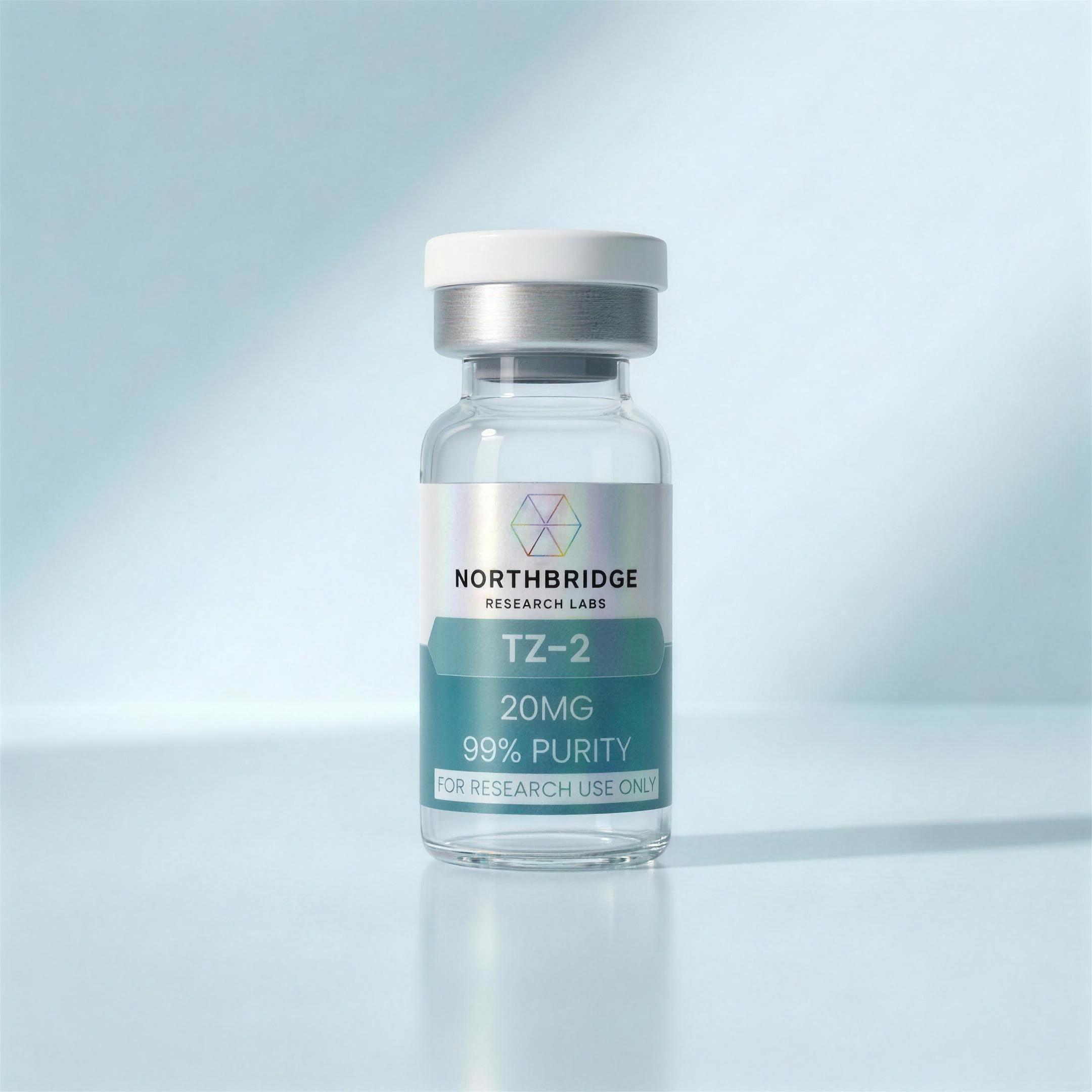
TZ-2 is a synthetic 39-amino acid peptide that functions as a dual agonist at both GLP-1 and GIP receptors. This innovative dual incretin approach activates two complementary metabolic pathways, making it a powerful research tool for studying glucose homeostasis, appetite regulation, and energy metabolism in laboratory settings.
99%+
20mg
Bundle & Save
Order before 2 PM EST, ships the same day. Fast, fully tracked, and sent in discreet, secure packaging. Free shipping on orders over $99.
Purity Guarantee. If independent third-party testing doesn't confirm our stated purity standards, you get a full refund plus a free replacement.
For Research Use Only
Intended for in-vitro research only. Not for human consumption. Must be 21+.
Specifications
Certificate of Analysis
Each batch of TZ-2 undergoes rigorous third-party testing to ensure purity and identity verification. The lab report for the latest batch is being finalized.
Research background
TZ-2 (Tirzepatide-Type) Dual GIP/GLP-1 Agonist: A Research Overview
The receptor biology behind tirzepatide-type dual GIP and GLP-1 receptor agonism, what 'imbalanced and biased' agonism means, what the SURPASS and SURMOUNT trials reported, and how dual agonism differs from triple.
Overview
Biochemical Characteristics
TZ-2 incorporates structural elements from both GIP and GLP-1, enabling high-affinity binding to both receptors. Published pharmacology describes this dual agonism as imbalanced, with greater potency at GIPR than at GLP-1R, and biased signalling at GLP-1R.
Research Applications
Pathway / Mechanistic Context
Preclinical Research Summary
Form & Analytical Testing
Mechanisms of Action
Dual Receptor Activation - Simultaneous agonism at GLP-1R and GIPR, with greater relative potency at GIPR in published studies
Glucose-Dependent Insulin Secretion - Potentiates β-cell insulin release only under hyperglycemic conditions
Appetite Regulation - Activates satiety centers through hypothalamic GLP-1R signaling
Gastric Emptying - Delays gastric transit to prolong nutrient absorption and reduce postprandial glucose
Research Applications
1Metabolic Research
Studies on glucose metabolism and insulin secretion through dual incretin pathway activation.
Key Research Findings
- Greater glycemic control than a selective GLP-1R agonist in a published head-to-head trial
- Enhanced insulin secretion in glucose-dependent manner
- Reduces glucagon secretion during hyperglycemia
- Improved β-cell function and insulin sensitivity in published studies
2Appetite & Energy Balance Research
Investigation of food intake regulation and body weight effects.
Key Research Findings
- Activates hypothalamic satiety pathways through GLP-1R
- Reduces food intake in animal models
- Greater body-weight reduction than a GLP-1R agonist alone in published studies
- GIPR component may enhance metabolic efficiency
3Dual Incretin Pharmacology
Studies on combined receptor activation and pathway synergy.
Key Research Findings
- High-affinity GIPR agonism with lower relative GLP-1R potency (imbalanced agonism)
- Synergistic effects exceed single pathway activation in preclinical studies
- Useful for comparing mono- vs. dual-agonist approaches
- Novel target for metabolic disease research
Supporting Research & Bibliography
The following peer-reviewed publications support the research applications described above. References are provided for informational purposes to assist researchers in their literature review.
Total references: 4
Note: The information provided is for research reference only. It summarizes published in-vitro, animal and, where cited, human clinical studies of the compound; findings from those studies are not claims about this product. This product is intended for laboratory research purposes only. Not for human or veterinary use.
Research Use Only: This product is intended for laboratory research purposes only. Not for human or veterinary use. By purchasing, you confirm that you are a qualified researcher and will use this product in accordance with all applicable regulations.